2026 Best Wafer Roll Machine Features and Buying Guide?
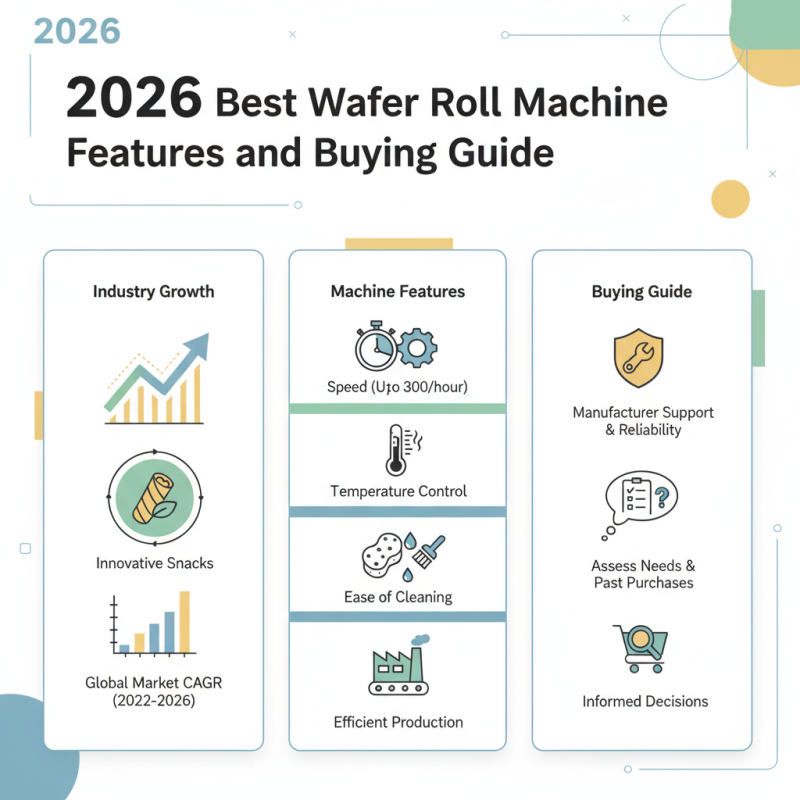
The wafer roll industry is experiencing significant growth, driven by increasing demand for innovative snacks. According to industry reports, the global wafer roll market is expected to expand at a CAGR of 7.5% between 2022 and 2026. A key player in this market is the Wafer Roll Machine, which is essential for producing high-quality rolls efficiently.
When selecting a Wafer Roll Machine, understanding the features that enhance production is critical. Factors such as speed, temperature control, and ease of cleaning significantly impact the output quality. High-performance machines can produce up to 300 wafers per hour, appealing to manufacturers aiming to meet rising consumer demands. Yet, not all machines deliver equally, with varying features that can confuse buyers.
Investing in a Wafer Roll Machine requires careful consideration. It's important to assess not just features, but also manufacturer support and reliability. Some machines may offer advanced capabilities while lacking adequate customer service. Reflecting on past purchases also helps identify improvements required in future investments. Thus, this guide aims to clarify essential features and buying tips to support informed decisions in this evolving market.
Key Features to Look for in Wafer Roll Machines
When selecting a wafer roll machine, several key features significantly impact performance and output. Efficiency stands at the forefront. Reports indicate that high-quality machines can produce over 1,000 rolls per hour. This rate can dramatically affect production timelines and profit margins. Consider the baking capacity; larger equipment allows for more simultaneous baking trays. This directly translates to higher throughput in busy environments.
Another crucial aspect is temperature control. Proper temperature management ensures consistent quality. Variations in heat can lead to uneven baking, resulting in subpar products. Additionally, machines with advanced automation can further enhance productivity. Industry data suggests that automated functions reduce labor costs by nearly 30%.
Ease of cleaning is also worth noting. Machines that are difficult to maintain can introduce inefficiencies. Regular cleaning is vital to prevent contamination. Hence, machines designed with removable components facilitate this process. Furthermore, design flaws might pose challenges, requiring thoughtful adjustments. Investing in a model with thoughtful engineering pays off in the long term. Thus, weigh these features carefully against your production needs and goals.
2026 Best Wafer Roll Machine Features Comparison
Types of Wafer Roll Machines Available on the Market
When exploring wafer roll machines, it's crucial to understand the different types available in the market. Most machines fall into three categories: manual, semi-automatic, and fully automatic. Manual machines require hands-on operation. They can be cost-effective but demand more labor and skill. Users often find it challenging to maintain consistent results without practice.
Semi-automatic machines bridge the gap between manual and fully automatic options. They automate some processes while still needing operator input. This type is popular among small bakeries. It offers a mix of efficiency and control. However, operators may need time to familiarize themselves with the setup.
Fully automatic machines are best for large-scale production. They handle mixing, baking, and rolling with minimal human intervention. While these machines increase output, they also come with a higher price tag. Users should assess their production needs carefully. A machine that seems perfect might not fit every business model, necessitating thoughtful consideration before purchasing.
Factors Influencing the Price of Wafer Roll Machines
When considering a wafer roll machine, several factors can influence its price. Quality materials can drive costs up. Machines with stainless steel components are often more expensive but usually last longer. Basic machines may be less costly, yet they might not provide consistent results. Durability is essential for long-term investment.
The machine's capacity also plays a role. High-output models generally come with a steeper price tag. If the demand for wafer rolls is high, investing in a more efficient machine could be worthwhile. However, think twice before making a hasty decision. Sometimes, smaller operations do well with affordable options.
Moreover, technological features affect pricing. Machines with advanced controls offer more precision but might exceed a tight budget. Evaluate if those features are necessary for your production. It's easy to get carried away with fancy tech, but not always practical for smaller setups. A thorough assessment of your needs is vital before committing to a purchase.
Maintenance Tips for Longevity of Wafer Roll Machines
Maintaining a wafer roll machine is essential for its longevity. Regular cleaning prevents residue build-up. After each use, wipe down all surfaces. It’s important to check the heating elements. Residual batter can affect performance, leading to uneven cooking. Set a routine for deep cleaning. This could be weekly or bi-weekly, depending on usage.
Lubrication is another critical aspect. Use food-safe oils on moving parts. This reduces friction and wear. Pay attention to the manufacturer's guidelines. Over-oiling can create problems too. Tightening any loose bolts is necessary. A loose part can cause operational issues and safety hazards.
Some users forget calibration. Regularly check the settings for temperature and time. An incorrect setting can lead to poor-quality output. Track any changes in performance. If something feels off, investigate it quickly. Don’t wait for major issues to arise. Regular maintenance ensures your machine works efficiently for years to come.
How to Choose the Right Wafer Roll Machine for Your Needs
Choosing the right wafer roll machine is crucial. There are several factors you should consider. First, think about the output capacity. If you need high production, select a model that can handle larger batches. Smaller machines might suffice for home use.
Next, look at the features. Some machines come with adjustable temperature controls. This feature ensures consistent results. Pay attention to the material quality as well. A sturdy build can mean a longer lifespan. Test the ease of cleaning too. Complicated parts may not be worth the time and effort.
Also, consider the machine's size. Will it fit in your kitchen? Compact machines save space but may limit production. Lastly, check user reviews. They often highlight flaws or advantages not mentioned in specs. Reflect on what matters most to you. Every choice has its trade-offs.