China Top 10 Green Sand Casting Manufacturers
China’s Green Sand Casting industry includes foundries serving machinery, automotive, construction, and agricultural equipment markets. This guide introduces ten manufacturers for buyers comparing potential suppliers. A Green Sand Cast component begins with a compacted mixture of sand, clay, and water formed around a pattern. The process can suit repeat production, but results depend on control at every stage.
A useful comparison goes beyond company size or a polished website. Check the foundry’s materials, molding capacity, pattern-making support, machining options, and inspection methods. Ask for details such as available iron grades, casting weight range, dimensional tolerances, and sample lead times. A clear answer is a good sign. So is a documented quality process. Photos of molds, pouring areas, and finished castings can help, though they do not replace a plant audit or sample testing.
The manufacturers featured in a “top 10” list should be treated as candidates, not a universal ranking. Supplier suitability changes with part geometry, order volume, delivery needs, and the buyer’s own specifications. Some foundries may excel at large castings, while others focus on smaller, repeat-run components. No list is perfect. Verify current capabilities directly, request relevant inspection records, and compare quotations on the same technical basis. A brief technical review can prevent costly misunderstandings later. This guide offers a starting point, not a substitute for careful due diligence.
What Green Sand Casting Is and How It Works
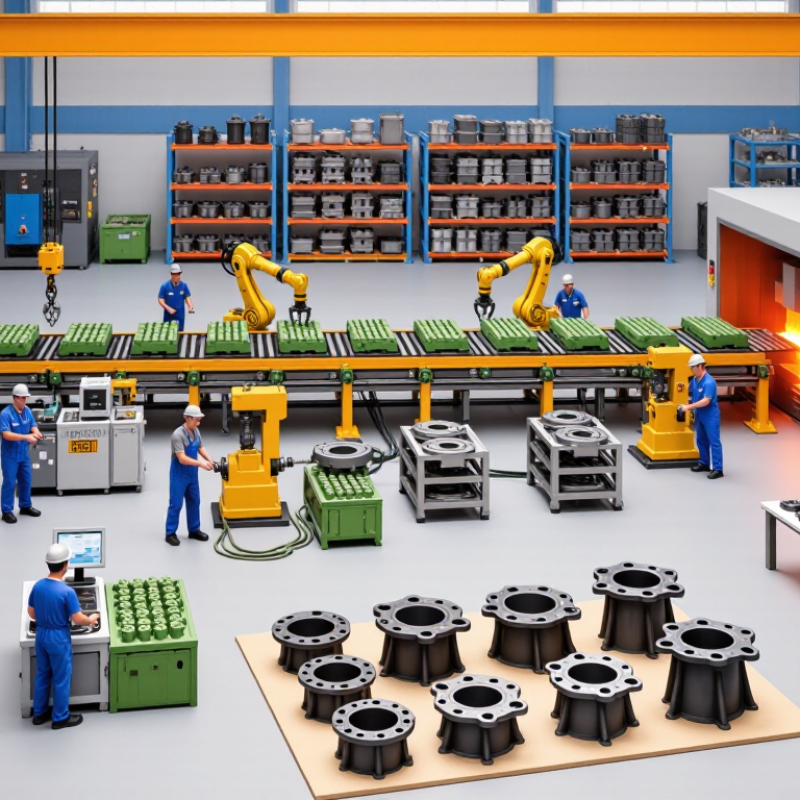
Green sand casting uses moist, reusable sand rather than green-colored material. A typical molding mix combines silica sand, clay binder, water, and sometimes additives. The pattern forms a cavity in compacted sand; a core can create internal passages. Molten metal enters through gates and runners, then cools inside the mold. The word “green” describes the mold’s uncured condition.
In practice, operators control moisture and compaction closely. Too little moisture weakens the mold; too much can create steam defects or rough surfaces. A technician checks the sand’s feel and test results, not appearance alone. The pattern is removed, the mold halves are closed, and metal is poured. After cooling, workers break the mold during shakeout and separate the casting from the sand. Much of the sand can be screened, adjusted, and reused. It is efficient, though not endlessly reusable; fines and changing binder levels affect performance.
The scale is substantial. Modern Casting’s 2023 Census of World Casting Production reported about 109.9 million metric tons of castings worldwide in 2022. That figure covers multiple casting processes, not green sand alone, but it shows why dependable mold preparation matters. Green sand remains useful for complex shapes and varied production volumes. Its limits deserve attention: moisture variation, dust control, and dimensional consistency can still challenge a foundry, even with experienced operators.
Why Green Sand Casting Matters in China’s Foundry Industry
Green sand casting remains important in China because it combines reusable molds, flexible production, and relatively low tooling costs. China Foundry Association’s 2023 industry statistics reported national casting output of about 51.75 million tonnes. That scale makes small gains in sand recovery and process stability meaningful across many foundries. A mold’s moisture, clay content, and compaction must be controlled closely; otherwise, rough surfaces, gas defects, or dimensional variation can follow. On the shop floor, a handful of damp sand can behave differently from a dry batch. Details matter.
Reuse is valuable, but it does not make the process impact-free. The U.S. Environmental Protection Agency’s AP-42 foundry chapter identifies sand handling and shakeout among operations associated with particulate emissions. Reclamation systems, covered conveyors, and dust collection can reduce losses, while routine checks help maintain mold quality. Yet reclaimed sand can accumulate fines or contaminants, so reuse needs testing rather than optimism. Green sand is not automatically greener. Foundries still face trade-offs among casting quality, energy use, water, and waste. Better records help: tracking sand additions, moisture, rejects, and recovery rates gives engineers evidence to improve the process, instead of relying on habit alone.
How to Evaluate Green Sand Casting Manufacturers
Evaluate a green sand casting manufacturer by checking its process, records, and finished parts—not only its quoted price. Ask how operators control moisture, compactability, permeability, and sand temperature during each shift. These values affect mold strength, gas escape, and surface quality. Watch the line. Look for routine tests, dated logs, and a clear response when readings drift. An experienced team should explain how it adjusts the sand mix, rather than simply promising consistent results. That explanation matters.
Request sample castings made from the same alloy and similar dimensions as your parts. Inspect edges, parting lines, and machined areas, then compare them with drawings and agreed tolerances. Ask for inspection reports, defect trends, and corrective-action examples; one polished sample tells little. Tour the foundry if practical. Notice housekeeping around sand reclamation, core storage, and pouring stations. Confirm monthly capacity, tooling ownership, lead times, and how urgent changes are handled. Small details count. Records may look tidy while actual shifts vary, so verify controls on the floor. Choose a manufacturer whose answers are specific, measurable, and open to follow-up.
China’s Top 10 Green Sand Casting Manufacturers
China’s Top 10 Green Sand Casting Manufacturers
China’s top ten green sand casting manufacturers should be assessed by process control, product consistency, and delivery capability—not production volume alone. The American Foundry Society’s 57th Census of World Casting Production reported approximately 111.8 million tonnes of castings worldwide in 2022. China accounted for about 51.5 million tonnes, the largest national share. These figures include multiple casting processes; they do not measure green sand output specifically. That distinction matters when comparing suppliers.
A useful shortlist should check molding-line capacity, pattern flexibility, inspection methods, and experience with the required alloy and casting weight. Ask how each factory tracks sand moisture, permeability, and temperature. These variables affect mold strength and surface finish. Request sample inspection records and clarify how defects are handled. A polished production tour can look reassuring, but it cannot replace repeat-order data. Even a careful ranking has limits: public information rarely reveals a foundry’s actual process stability.
Tips: Specify tolerances, annual demand, and critical surfaces before requesting quotes. Ask for a trial casting. Compare its measured results with the drawing, not just its appearance.
How to Choose a Manufacturer for Your Project
Choosing a green sand casting manufacturer begins with a clear part specification. Share the alloy, annual volume, critical dimensions, and expected service conditions. Ask whether the foundry has produced similar shapes and wall thicknesses. A photo of a casting is not enough; request sample inspection data and details about its measuring equipment. Ask for evidence.
Green sand quality depends on controlled moisture, permeability, and compaction. Ask how operators monitor these properties and adjust the mix during production. For a trial order, check dimensions, surface finish, and internal soundness against agreed criteria. Discuss how defects such as porosity or shrinkage are recorded and addressed. The answers should be specific, not just reassuring.
Also assess communication and practical capacity. Confirm tooling ownership, sample lead time, production scheduling, and how design changes are handled. If possible, review the process in person or through a live video walkthrough. A capable supplier should explain trade-offs, such as how a thicker section may affect cooling and finishing. No foundry is perfect, and a spotless sample cannot predict every production run. Compare documented controls and follow-up support, not price alone. A low quote may omit inspection steps or finishing work. Ask what is included.
China Green Sand Casting: Approximate Alloy Melting Ranges
Compare common alloy families when assessing whether a foundry can support your project’s material requirements.
Ranges are approximate and vary with alloy composition. They show melting ranges, not pouring temperatures. Confirm the exact grade, process capability, and quality controls with each prospective manufacturer.