How to Choose the Best Tiller Cultivators for Your Farm?
Choosing the right Tiller Cultivators starts with the ground beneath your boots. A compact garden plot and a broad, clay-heavy field ask different things from a machine. Soil texture, working depth, acreage, and available power all matter. So do transport, maintenance, and the operator’s comfort after a long day.
A useful principle from agricultural machinery specialists is: “Match the tiller to your soil, acreage, and working depth—not just its advertised horsepower.” This is practical guidance, not a verified quotation from a named expert; a source is needed before assigning it to an individual. Keep that distinction in mind when comparing brands and claims. A machine that looks impressive on a showroom floor may struggle in wet clay or feel oversized between narrow rows.
This guide will help you assess tine design, engine or tractor compatibility, adjustment options, and service needs. Look for details you can check: tine width, recommended depth, parts availability, and the manufacturer’s operating guidance. A small mismatch can leave hard clods, uneven beds, or wasted fuel. Real farms are rarely tidy test plots. Weather changes; soil varies across one field. There is no perfect choice for every farm. The aim is a dependable fit, chosen with evidence and a clear view of trade-offs.
Classify Walk-Behind and Tractor-Mounted Tillers by Farm Scale and Task
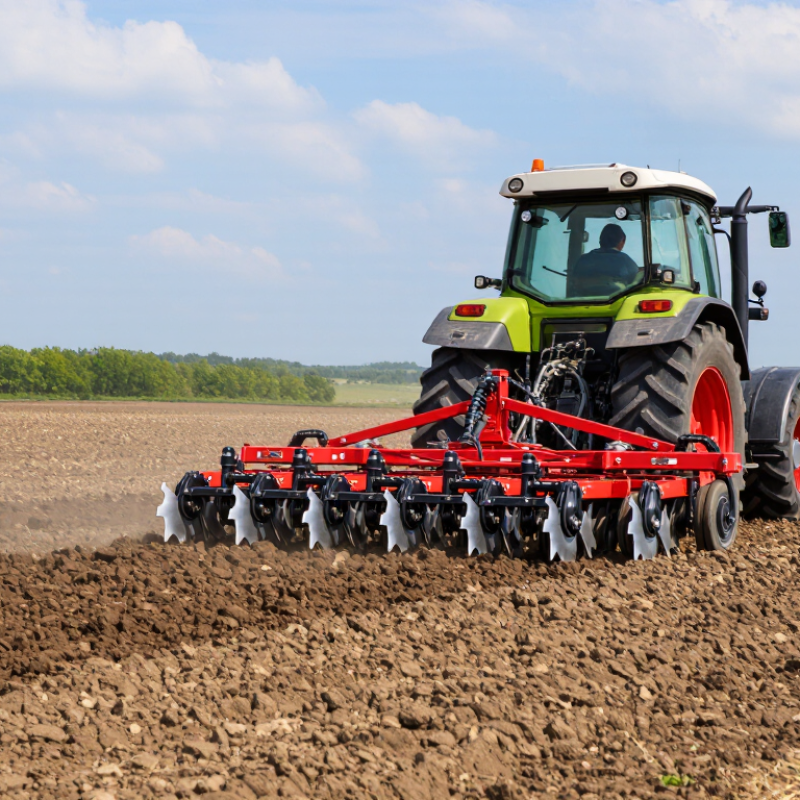
Choose a walk-behind tiller for compact plots, raised beds, and narrow orchard rows. Its smaller working width helps navigate around posts and irrigation lines, while adjustable depth can limit disturbance near crop roots. It suits lighter soil preparation and repeated bed work, but struggles in dry, compacted ground. Check the machine’s weight, tine width, and depth settings against your soil and operator strength. A small plot can still be demanding.
For larger fields, a tractor-mounted tiller can cover more ground per pass and handle heavier residue, provided the tractor has suitable power and hitch capacity. The USDA National Agricultural Statistics Service’s 2022 Census of Agriculture counted about 1.9 million U.S. farms across 880 million acres. That scale makes one “standard farm” a poor guide: match implement width to field layout, turning space, and workload, not acreage alone. Not always. A tight orchard may favor a walk-behind, even on a larger farm. Soil moisture matters, too; working wet soil can smear and compact it. Test a short strip first, then reassess depth and speed. The first estimate may be wrong.
Match Tilling Width and Depth to Bed Layout and Crop Rooting Needs
A tiller’s working width should match the beds you actually work, not just the open space in your field. Measure bed tops, paths, and gate openings before choosing a machine. For narrow raised beds or closely spaced rows, a compact pass helps avoid clipping crop edges. Wider beds may suit a broader tiller, but leave enough room to turn without crushing plants or compacting paths. Keep room to maneuver.
Tilling depth matters just as much. Shallow-rooted crops often need only a loose, even seedbed near the surface. Crops with deeper roots may benefit from loosening farther down, especially where a compacted layer restricts growth. Avoid turning the whole bed deeply by default; repeated deep tilling can disturb soil structure and bring buried weed seeds upward. Roots matter. Soil conditions matter, too.
Start with the crop’s rooting needs and the bed’s existing condition, then adjust depth in small steps. A simple spade check can reveal whether the soil is loose or firm below the surface. Test a short strip before working an entire bed. If the tiller bounces, leaves large clods, or pulls soil into the paths, the setting may be too aggressive. Field conditions vary, and a setting that worked last season may not suit wet or unusually dry soil.
Compare Engine Ratings, Tine Design, and Manufacturer-Specified Working Depth
Choose engine power by matching the tiller’s working width and soil, not by horsepower alone. ASABE’s Agricultural Machinery Management Data, D497.7, estimates implement power needs using factors such as width, speed, and field conditions. That matters because damp clay can load an engine far more than loose garden soil. Check how the engine’s rating was tested; SAE J1349 specifies a method for measuring net engine power. A bigger number is not automatically better. It may mean extra weight and fuel use without useful gains.
Tine shape affects how the machine cuts and mixes soil. Curved tines generally lift and turn soil; narrower or more aggressive designs can bite into firmer ground, but may pull the tiller sideways. Look for tine spacing, rotation direction, and replaceable wear parts. Small details matter. Compare published working depth with the depth you need, and treat the maximum as a ceiling, not a routine setting. Actual depth changes with soil moisture, compaction, and forward speed. USDA NRCS soil-health guidance cautions against unnecessary disturbance, so deeper is not always better. One caveat: specifications rarely describe your exact field. If possible, test in a short strip and check whether the tines reach the stated depth without repeated passes.
How to Choose the Best Tiller Cultivator for Your Farm
Compare engine rating, tine configuration, and manufacturer-specified working depth. The chart shows approximate midpoints of common equipment-class specification ranges, not ratings for a particular model.
Reading the chart: Light front-tine cultivators commonly fall around 1–2 kW and 15–20 cm working depth. Mid-size rear-tine models are often around 3–4 kW and 20–25 cm; heavy rear-tine models around 4–6 kW and 25–30 cm. Front-tine designs suit lighter, maintained soil, while rear-tine designs generally provide more traction and stability in tougher ground. Actual performance depends on soil, setup, and the specific manufacturer’s specifications.
Estimate Field Capacity: Width (m) × Speed (km/h) ÷ 10 = ha/h
Choosing a tiller cultivator is easier when you estimate how much ground it can cover. Use this simple formula:
working width in meters × travel speed in kilometers per hour ÷ 10 = theoretical field capacity in hectares per hour
For example, a 2.4-meter cultivator traveling at 4 km/h gives 0.96 ha/h. A useful starting point.
That figure assumes steady travel and full use of the working width. Real fields include turns, overlaps, and short pauses to clear debris or check depth. Wet, compacted soil may also slow the tractor, while a narrower pass can improve control around field edges.
So treat the calculation as an estimate, not a guarantee. Match the implement’s width to your tractor’s power and the shape of your fields; a wider machine is not automatically more productive.
Tips:
Measure a representative pass in your own field. Note the time, distance, and actual width worked, then compare the result with your estimate. Leave room for turning and overlap. Even careful measurements miss something, so revisit the numbers after a full day’s work.
Check Noise Exposure Against OSHA’s 85-dBA Hearing-Program Action Level
Choosing a tiller cultivator means checking more than engine size and working width. Noise matters, especially during repeated passes across a field. OSHA uses 85 dBA as the action level for an eight-hour time-weighted average in covered workplaces. At or above that level, hearing-conservation requirements may apply. Check which rules cover your farm and workers; requirements can depend on the work setting.
Measure at the operator’s ear while the tiller works in real soil, not only while it idles. A calibrated sound-level meter can help compare models, while a noise dosimeter better tracks exposure over a full shift. Phone apps are convenient, but they are not a reliable compliance measurement.
Easy to overlook.
Record the reading, operating time, and distance from the machine. Nearby workers may face different exposure, particularly beside a shed wall that reflects sound. If readings approach 85 dBA, consider shorter operating periods, quieter equipment, maintenance, and properly fitted hearing protection. Check again after changing attachments or working conditions. The first reading may be imperfect; note that uncertainty instead of treating it as a firm answer.