Choosing a pipe bending machine is not a matter of buying the largest model on the floor. It means matching the machine to the tube material, diameter, wall thickness, bend radius, and daily production volume. A stainless-steel tube can spring back after bending; a thin-wall section may wrinkle if tooling and support are poorly matched. Small details matter. Even a few degrees of springback can spoil a fit-up.
The right choice starts with real parts and tolerances, not a brochure’s maximum capacity. Compare mandrel, rotary-draw, and roll-bending options against the shapes you actually produce. Check setup time, control features, tooling availability, operator training, and service support. Ask suppliers to run a sample tube from your own stock. Watch the bend, then measure it. A machine that looks impressive may still be wrong for a short-run shop.
A verified pipe-bending specialist should review this proposed quote before publication: “Choose the machine around the bend you must repeat, not the capacity you may never use.” Treat it as a draft, not a sourced quotation. That distinction matters. It is easy to overvalue speed and overlook changeover time, floor space, or the skill needed to set up a mandrel. This guide explains how to weigh those trade-offs and select a pipe bending machine that suits your work, budget, and quality targets. The answer may be less tidy than a spec sheet suggests. That is worth admitting.
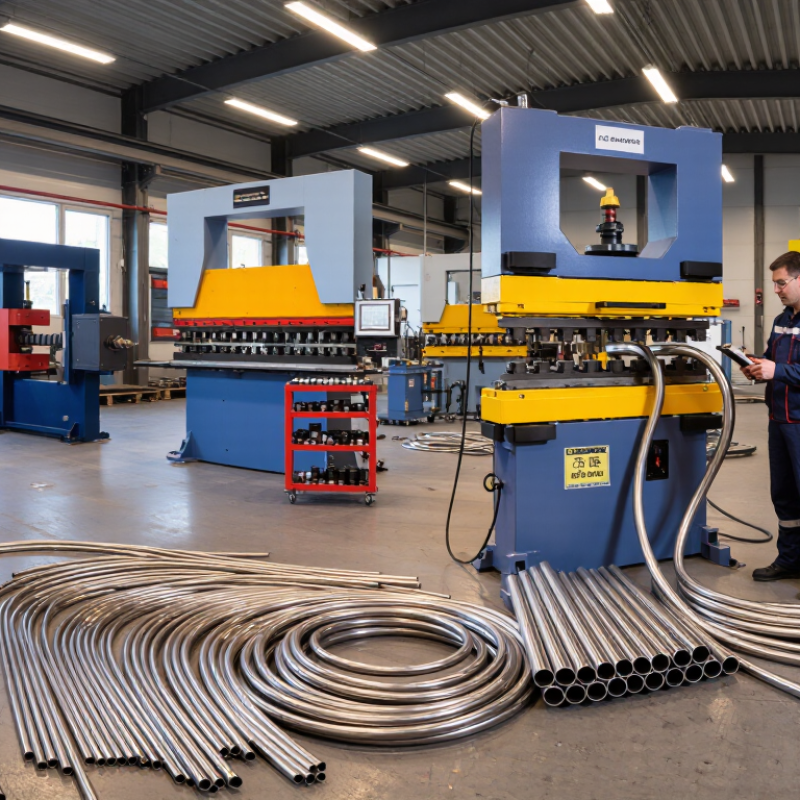
Start with the part, not the machine. Record the tube material and grade, outside diameter, wall thickness, bend radius, bend angle, and required tolerance. Note whether the finished pipe can show ovality or surface marks. Also define the production rate: one-off repair work needs different tooling and setup time than repeated production. Small details matter. A drawing alone may miss access limits, clamp clearance, or the order of several bends.
Check the material against the intended bend geometry. Tight radii, thin walls, and harder alloys can increase wrinkling, flattening, and springback risks. The machine’s capacity should cover the largest specified tube and the most demanding bend, not just the average job. The World Steel Association’s October 2024 Short Range Outlook estimated global steel demand at about 1.75 billion tonnes in 2024. That figure is useful context, but it cannot determine a machine’s capacity; the actual pipe grade and dimensions must guide selection. A common planning mistake is treating nominal diameter as the whole requirement.
Tips: Bring a representative pipe sample and test the tightest bend. Measure the finished angle and ovality, then check whether the result meets the drawing. Test one. Revisit the specification if the sample fails; assumptions about springback are easy to get wrong.
How to Choose a Pipe Bending Machine?
Compare Machine Types and Their Bending Methods
Grand View Research estimated the global metal fabrication market at USD 20.3 billion in 2023, with projected growth through 2030. This wider trend makes efficient forming more important, but market growth alone cannot determine the right machine. Match the bending method to tube material, wall thickness, bend radius, and production volume. Rotary-draw machines pull material around a fixed die, offering repeatable angles for frames and exhaust components. Add a mandrel when tight bends risk flattening or wrinkling the tube.
Compression bending presses the tube around a stationary form. It is simpler and often suits larger radii, though control over deformation may be limited. Roll benders feed material through rollers to create broad arcs; they are useful for rails and structural curves, not sharp elbows. CNC control improves repeatability across complex sequences, but setup and programming take time. A clean sample bend can still conceal thinning on the outside wall, so inspect cross-sections and measure ovality before approving production.
Tips: Test the actual tube grade and wall thickness. Record the bend radius, springback, and cycle time. Compare scrap and setup costs, not just machine price. If results vary, revisit tooling alignment; it may be the real problem.
Choosing a pipe bending machine starts with the material and the largest pipe you expect to process. Steel, stainless steel, aluminum, and copper behave differently under pressure. A machine suitable for thin aluminum may struggle with thick-walled steel. Check the pipe’s outside diameter, wall thickness, and required bend radius. Do not judge capacity by outside diameter alone. A tight radius can increase the risk of flattening or wrinkling, especially with thin walls.
Tips: List your most common pipe sizes and materials before comparing machines. Check capacity charts for each combination, not just the maximum diameter. Confirm which dies and mandrels are available. Specifications can vary, so ask how the rating was tested. A sample bend is useful.
Think about production volume, too. Manual machines may suit occasional repairs, while powered models can reduce effort for repeated bends. But faster is not always better; control matters when a bend must fit a jig or assembly. Inspect the tooling dimensions and adjustment range. A mismatch between die and pipe can leave marks or distort the section. One detail is easy to overlook: the material grade may change how much springback occurs after bending. Test a short offcut, measure the finished angle, and adjust cautiously.
These examples show how tube dimensions vary by material. Use outside diameter and wall thickness as a starting point, then confirm the bender’s capacity for the material, required bend radius, and tooling. The same diameter may require different machine capacity for different materials.
Choosing a pipe bending machine starts with the tubing you actually use. Check its material, outside diameter, wall thickness, and required bend radius against the machine’s capacity. Tooling must match the pipe profile; a poorly fitted die can leave dents, wrinkles, or flattened sections. Ask how quickly dies can be changed, especially if jobs vary. A quick change is useful.
Controls shape daily work. A manual setup may suit occasional bends, while programmable controls help repeat complex sequences. Look for clear settings for bend angle, feed length, and rotation. Run a sample using your own material, not just a demonstration tube. Springback can shift the final angle, and different batches may behave differently. I have seen teams trust a saved program too quickly; a small test bend can prevent wasted stock.
Accuracy claims matter only when the machine holds tolerance across repeated parts. Ask for measured results and learn how calibration is checked. Also inspect guarding, emergency stops, and interlocks, then confirm operators can reach controls without entering pinch points. These details are easy to overlook during a fast showroom visit. Bring a representative drawing and discuss realistic cycle speeds, maintenance access, and the space needed around the machine. A compact layout may look efficient, but leave room for safe loading and unloading.
A pipe bending machine’s purchase price is only the visible part of its cost. Include tooling, installation, operator training, energy use, and floor space in your estimate. A machine that bends a wide range of tube sizes may need extra dies for each diameter. Ask for a written list of included tooling and replacement-part prices. Small costs add up. Also consider scrap: inconsistent bends can waste costly tube stock, especially during setup.
Maintenance needs affect production long after delivery. Check how often the machine requires lubrication, calibration, and inspection. Ask which parts wear fastest and whether your team can replace them with standard tools. A clear maintenance schedule is useful, but it does not guarantee trouble-free operation. Dust, heavy shifts, and rushed setups can shorten component life. Leave room in the budget for service and unplanned downtime.
Supplier support should be specific, not just reassuring. Ask how quickly technicians typically respond, whether remote troubleshooting is available, and how long common spare parts take to arrive. Request practical training that covers setup, safe operation, and basic fault checks. If possible, speak with a current user about service after installation. A polished demonstration matters less than a dependable answer when a machine stops mid-shift. A spreadsheet helps, but it can still miss the cost of waiting for support.
| Machine Type | Typical Purchase Price (USD) | Typical Tooling Cost (USD) | Estimated Annual Maintenance (USD) | Estimated 5-Year Ownership Cost (USD) | Maintenance Needs | Supplier Support to Confirm | Best Suited For |
|---|---|---|---|---|---|---|---|
| Manual | $500–$3,000 | $200–$1,500 | $100–$500 | $1,200–$7,000 | Inspect the frame, dies, and clamps; lubricate moving parts; replace worn components as needed. No hydraulic or control system is involved. | Check availability of replacement dies, setup guidance, spare parts, and a clear warranty process. | Low-volume work, small-diameter tubing, prototypes, and shops with a limited budget. |
| Hydraulic | $5,000–$30,000 | $1,000–$5,000 | $500–$2,000 | $8,500–$45,000 | Check hydraulic hoses and fittings for leaks, monitor fluid condition and level, and inspect filters, seals, and dies. Service intervals depend on the machine and operating conditions. | Ask about hydraulic-system troubleshooting, technician availability, spare-part lead times, operator training, and warranty coverage. | Regular production where higher bending force and repeatability are needed without the cost of a fully automated system. |
| CNC Electric | $20,000–$100,000+ | $2,000–$10,000 | $1,000–$4,000 | $27,000–$130,000+ | Inspect tooling and moving assemblies, keep the machine clean, and follow the maker’s guidance for electrical, servo, and control-system checks. Software and calibration support may be needed. | Confirm commissioning, programming and operator training, software updates, remote diagnostics, local service coverage, and replacement-part availability. | Higher-volume production, repeat jobs, complex bends, and applications where programmable accuracy can reduce setup time and scrap. |
| Planning note: These are broad illustrative USD ranges, not quotations. The five-year estimate is calculated as purchase price + initial tooling + five years of estimated maintenance. It excludes labor, energy, installation, financing, taxes, shipping, downtime, and additional tooling; actual costs vary with capacity, features, usage, location, and service terms. | |||||||