How to Choose the Right Strap Latches in 2026

Choosing the right Strap Latches in 2026 starts with the job they must perform. A latch holding a light equipment cover faces different demands from one securing a storage box on a vibrating vehicle. Consider the object’s weight, how often it will be opened, and whether it may shift during use. Small details matter. A few millimeters of misalignment can make a latch difficult to close.

Start by checking the manufacturer’s rated capacity and installation guidance. Compare those specifications with the complete assembly, including the strap, mounting points, and fasteners. A strong latch cannot compensate for weak attachment points. Measure the gap between the surfaces, too. Adjustable straps can help with changing fit, while fixed-length designs may suit consistent setups. Neither option is automatically better.

The working environment should shape material and finish choices. Moisture, dust, temperature changes, and repeated handling can affect performance over time. Look for clear product details, replacement-part availability, and instructions that explain proper installation. When a load is safety-critical, follow the equipment maker’s guidance and seek qualified advice rather than relying on appearance alone. Test the installed latch under ordinary conditions before regular use. Then inspect it periodically for wear, loosened hardware, or damage. There is no perfect checklist. Even careful selection can miss an unusual vibration or awkward angle, so reassess the fit after real use. A practical choice balances capacity, fit, durability, and ease of operation—not just price.
How to Choose the Right Strap Latches in 2026

Understanding Strap Latch Types and How They Work

Strap latches work by applying tension and holding it in place, but their mechanisms suit different jobs. A cam-buckle latch grips webbing when its lever closes. It is quick to release and useful for light-duty panels or removable covers. A ratchet latch winds the strap around a spool, creating greater tension for heavier loads. That extra leverage can crush soft materials, so tight is not always right.

Over-center draw latches pull two surfaces together as a lever passes its pivot point. They suit equipment boxes, access doors, and vibrating enclosures. Adjustable versions help when the gap changes slightly. Spring-loaded latches add a secondary catch, though dirt can make small moving parts stick. Check the mounting surface, strap width, corrosion exposure, and release access before choosing. A latch that is difficult to open with gloves may become a poor choice in the field.

For cargo applications, FMCSA’s cargo-securement rules provide useful engineering context: tied-down cargo systems must resist acceleration forces of 0.8 g forward and 0.5 g sideways or rearward under 49 CFR 393.102. The rule also requires aggregate working load limits of at least half the cargo weight. These figures apply to regulated cargo securement, not every enclosure latch. Still, they show why latch strength alone is not enough; webbing, anchors, and installation matter too. I have seen specifications look reassuring on paper, yet a weak mounting panel was the real failure point.


Defining Load, Access, and Environmental Requirements

Before selecting strap latches, define the load they must restrain. Record the static load, likely shock, vibration, and how the latch attaches to the panel or frame. A strong latch on thin sheet metal can still fail at its mounting points. For transport cargo, FMCSA’s cargo-securement rule sets an aggregate tiedown working-load limit of at least half the cargo’s weight. That is a transport-specific benchmark, not a rating for every latch. Check the whole load path. Not just the latch.

Then assess access and exposure where the hardware will actually be used. Can an operator release it while wearing gloves? Is there room to open it without catching nearby cables or pinching fingers? Salt spray, washdown chemicals, dust, and temperature swings can change performance over time. Salt changes everything. NACE International’s IMPACT study estimated corrosion costs at 2.5 trillion U.S. dollars worldwide each year, about 3.4% of global GDP. That figure covers many industries, not latch failures alone, but it shows why material and finish choices deserve attention. Specify inspection intervals and test samples under realistic conditions. A clean workshop test may miss grit in the hinge. Real exposure is messier. A neat specification can still leave gaps. Check the mounting surface, too.

How to Choose the Right Strap Latches in 2026 - Defining Load, Access, and Environmental Requirements
Selection dimension Requirement to define Selection guidance What to verify
Load and force direction Identify the force the latch must resist, including its direction and whether it is steady or changes during use. Choose a latch whose documented rating covers the actual application and load direction. Account for shock, vibration, and repeated loading where relevant. Confirm the rating basis and the permitted working load in the product documentation. Do not estimate capacity from appearance or size.
Safety-critical use Determine whether failure could cause injury, equipment damage, or loss of a secured load. Use a latch specifically rated and approved for the intended application. A general-purpose strap latch should not be treated as lifting or rigging hardware. Check applicable standards, installation requirements, inspection intervals, and any requirement for a secondary restraint.
Access and operation Define available hand clearance, operator access, opening frequency, and whether operation must be possible with gloves. Select a handle and release arrangement that can be operated comfortably without obstructing nearby parts. A guarded or locking handle may help prevent accidental release. Check the full handle travel, pinch points, clearance in the open position, and access to any lock or release.
Adjustment and fit Measure the gap between mounting points and note expected variation in the parts being secured. Choose an adjustable design when the fit changes or requires take-up. Use a fixed-length arrangement where repeatable geometry is assured. Verify adjustment range, strap or hook engagement, mounting-hole pattern, and whether adjustment remains secure in service.
Vibration and unintended release Assess vibration, movement, impact, and the consequences of a latch opening unexpectedly. Consider a positive locking or safety-retaining feature when the application needs added resistance to accidental release. No latch design eliminates the need for correct installation and inspection. Check how the lock engages, whether it can be confirmed visually, and whether it remains accessible for inspection.
Corrosion and outdoor exposure Identify exposure to rain, condensation, salt, cleaning chemicals, or other corrosive conditions. Match material and finish to the exposure. Stainless steel is commonly selected for corrosion resistance; coated steel may suit less corrosive environments when the coating is maintained. Confirm compatibility of the latch, fasteners, and mounting surface. Check for galvanic corrosion risk where dissimilar metals contact in a conductive, wet environment.
Temperature, dirt, and moisture Consider operating temperature, water ingress, dust, grit, and the cleaning process. Prefer a design and material specified for the actual environment. Exposed moving parts may need periodic cleaning and lubrication in dirty or wet service. Review temperature limits, chemical compatibility, drainage or water-trapping points, and maintenance instructions.
Mounting structure Determine the substrate, available mounting area, edge distance, and direction of force at the fasteners. Select mounting hardware and a substrate capable of carrying the application loads. The latch rating alone does not establish the strength of the complete assembly. Check fastener type, hole size, backing or reinforcement needs, alignment, and the strength of the supporting structure.
Inspection and service life Define how often the latch will be used and how it can be inspected or replaced. Choose a maintainable design with visible wear points and a practical replacement process. Frequent-use applications need inspection appropriate to their duty and environment. Inspect for deformation, cracks, corrosion, loose fasteners, worn pivots, and unreliable engagement; follow the manufacturer's maintenance guidance.
Selection note: Confirm the complete assembly—including latch, fasteners, mounting surface, and installation—meets the requirements of the intended application. Use the manufacturer’s documented ratings and instructions for final selection.

Selecting Materials, Sizes, and Mounting Configurations

Material choice should match the environment, not just the price. Stainless steel suits damp or outdoor settings, but its grade still matters near salt spray. Zinc-coated steel can work well indoors; scratched coatings may invite rust. Polymer components resist corrosion, though heat, sunlight, and load limits deserve attention. Check the latch’s rated capacity rather than judging strength by its appearance. Small details matter.

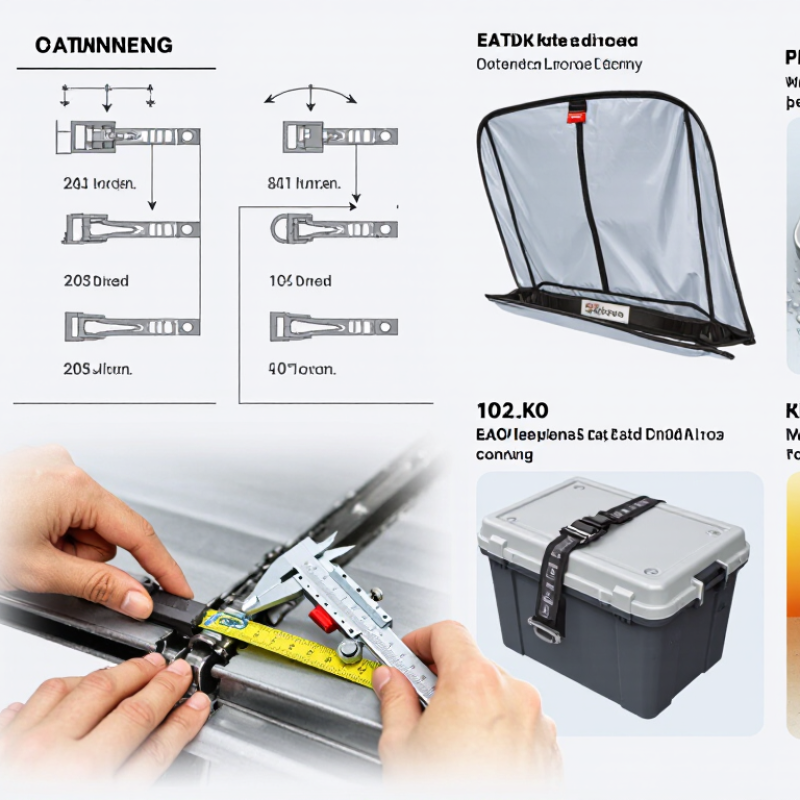
Sizing starts with the closed distance between mounting points. Measure the strap’s working range, hook clearance, and any gasket compression. A latch that is too short may need excessive force; one that is too long can rattle. It is easy to focus on strap length and overlook the keeper. That happens. For mounting, use a flat, reinforced surface and fasteners suited to its thickness and material. Align both halves before tightening, then open and close the latch several times. Watch for binding, shifting, or uneven pressure. If the assembly will vibrate, recheck fasteners after an initial period of use. A fit can look right and still need adjustment.

Comparing Security, Ease of Use, and Maintenance Needs

A strap latch should match the load, not just feel reassuring in your hand. The Federal Motor Carrier Safety Administration’s cargo-securement guidance sets a useful benchmark: tiedowns’ combined working load limit must equal at least half the cargo’s weight. That figure applies to the full tiedown system, not to one latch, so check the rated capacity of every component. For a box that rattles over rough roads, a positive lock and a visible closed position can make a loose latch easier to spot. Security matters.

Ease of use shows up on the tenth opening, not only the first. Try the latch with gloves on, and notice whether the strap feeds cleanly or snags at the slot. A lever that needs a hard pull may secure well but frustrate frequent access. Maintenance is simpler when the mechanism sheds grit and its wear points are easy to inspect. Check for frayed webbing, corrosion, bent hooks, and a lock that no longer catches. The U.S. Department of Energy’s Operations & Maintenance Best Practices Guide treats routine inspection as a core reliability practice, though it does not prescribe a universal strap-latch service interval. That gap matters: set checks around use, weather, and vibration. I would not assume a latch is sound just because it still closes.

Checking Compatibility, Safety Ratings, and 2026 Product Updates

How to Choose the Right Strap Latches in 2026

Check fit before load rating. Measure strap width and thickness, then compare them with the latch slot and adjustment range. Confirm the latch suits the mounting surface, expected tension, and exposure to water, dust, or vibration. A latch that fits on paper may still rub against a sharp edge or loosen when the load shifts. Small details matter.

Read the rating label carefully. Breaking strength is not the same as working load limit, or WLL. For U.S. road cargo, the FMCSA cargo securement rules state that the combined WLL of tiedowns must generally equal at least half the cargo’s weight. That threshold applies to the securement system, not one latch alone. For web lashings, EN 12195-2 is a useful reference for labeled capacity and product information. Check the actual tag and datasheet; don’t infer capacity from metal thickness or appearance.

For 2026 updates, compare revised datasheets for material, corrosion protection, replacement parts, and traceability details such as batch codes. These features vary by product, so avoid assuming a newer latch is automatically safer. Inspect the strap for cuts and the latch for bent parts before each use. It takes seconds. One imperfect habit is relying on a familiar setup without rechecking a changed load or strap; that deserves a second look.