How to Choose the Right Waterjet Machine for Your Needs?
Choosing the right waterjet machine can be a daunting task. With numerous options available, understanding your specific needs is crucial. According to a report by IBISWorld, the waterjet cutting industry has grown steadily, seeing an annual increase of 3.5% over the last five years. This growth indicates a rising demand for precision cutting equipment across various sectors.
Industry expert John H. Aaron states, “Selecting the right waterjet machine is not just about the features; it’s about fitting those features to your operational needs.” This insight reflects the complexity of the decision-making process. Waterjet machines come with varying specifications, from pressure capabilities to cutting speeds. Each feature impacts both efficiency and cost.
Many users often overlook their unique production requirements, leading to suboptimal choices. For instance, a high-pressure machine might seem appealing but could be unnecessary for certain materials. Likewise, investing in a machine with advanced features can become a financial burden if they are underutilized. Thus, careful consideration and analysis are vital to ensure the waterjet machine meets your specific applications.
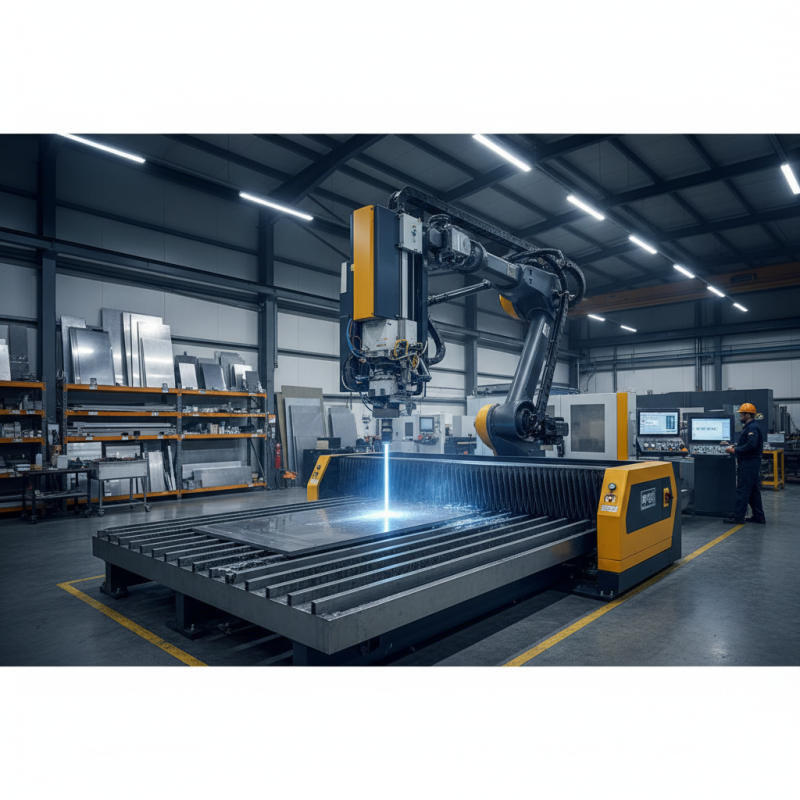
Understanding Different Types of Waterjet Machines Available in the Market
When selecting a waterjet machine, it's essential to understand the different types available. There are two main categories: pure waterjet and abrasive waterjet machines. Pure waterjet systems use only water and are best suited for soft materials like rubber and foam. Abrasive waterjet machines, on the other hand, integrate garnet or other abrasives, enabling them to cut through harder materials like metal or stone.
A recent industry report indicates that the global waterjet cutting machine market is expected to reach $1.26 billion by 2026, driven by technological innovations. This growth reflects the increasing demand across various sectors, including aerospace and automotive. Consider the materials you’ll be working with to determine which machine fits your requirements.
Tip: Evaluate the thickness of materials you'll cut. Pure waterjets are only effective on materials up to 2 inches thick. Abrasive machines can handle thicker materials, often exceeding 6 inches.
Another factor to consider is the machine's versatility. Some models offer multi-axis capabilities, allowing for intricate designs. This feature is especially beneficial in industries like jewelry or architectural design where precision is vital.
Tip: Take time to trial different machines if possible. Hands-on experience can reveal strengths and weaknesses that data alone might not show.
How to Choose the Right Waterjet Machine for Your Needs?
| Machine Type |
Pressure (psi) |
Cutting Thickness (inches) |
Application |
| Abrasive Waterjet |
60,000 |
8 |
Metal, Stone, Glass |
| Pure Waterjet |
40,000 |
0.5 |
Foam, Plastic, Food |
| Dynamic Waterjet |
60,000 |
4 |
Complex Shapes, Thick Materials |
| Waterjet 5-Axis |
55,000 |
6 |
High Precision Cutting |
Identifying Your Specific Cutting Needs and Materials
When choosing a waterjet machine, pinpointing your cutting needs is essential.
Consider the type of materials you plan to work with. Are you cutting metals, glass, or ceramics? Each material requires different pressure levels and nozzle designs. Identifying these specifics helps narrow down your options. For example, cutting aluminum may require a different approach compared to cutting stone.
Thickness is another crucial factor. Some projects might involve thin sheets, while others may need to cut through several inches of material. Think about the consistency of the materials too. Composite materials can behave unpredictably. Understanding how these behave under pressure is vital. If you're unsure, it might be wise to test various materials before making a commitment.
Budget constraints often complicate decision-making. While a higher price may come with advanced features, ensure those features match your real needs. Equipment that excels in precision might be unnecessary for larger, rough cuts. Take time to reflect on your typical projects. Do you need versatility or specialty? Balancing these considerations can lead to better long-term satisfaction with your machine choice.
Evaluating Performance Metrics: Pressure, Speed, and Efficiency
When selecting a waterjet machine, it's crucial to examine performance metrics closely. Pressure is a key factor. Higher pressure typically leads to cleaner cuts. A machine operating at 60,000 psi can slice through materials with ease. However, extreme pressure might increase maintenance needs. Balancing performance and durability is vital.
Speed plays another significant role. The cutting speed affects overall efficiency. While fast speeds save time, they might compromise precision. Finding the right speed for your specific material is essential. For instance, softer materials can handle higher speeds, but harder materials require caution.
Efficiency should not be overlooked. An efficient machine minimizes waste and energy consumption. Look for machines that offer adjustable settings. These features allow you to adapt based on your workload. Remember, a powerful machine isn’t always the best choice. Evaluate how each performance metric aligns with your production goals. It's worth spending time to fine-tune your selection. Ask yourself, is the machine truly meeting your needs? Reflect on your operational requirements for clarity.
Assessing Budget Constraints and Total Cost of Ownership
When choosing a waterjet machine, budget constraints play a crucial role.
It's not just about the purchase price; consider the total cost of ownership. This includes maintenance, operational costs, and potential downtime. From the outset,
calculate all expenses involved in owning the machine. This will provide a clearer picture of your financial commitment.
Tip: Compare ownership costs between different machines. A lower initial price may lead to higher long-term costs.
Analyze factors like energy consumption and parts replacement. Sometimes, the more expensive machine is the better investment in the long run.
Consider the additional costs of materials and labor. These can add up quickly. Ensure you understand the average lifespan of parts
and what maintenance requires. If a machine needs frequent repairs, it could become a hidden money pit. It's essential to evaluate everything thoroughly.
Tip: Ask for real user experiences. Sometimes, machines are marketed well, but they underperform.
Don't hesitate to reach out to current users. Their insights can help you avoid costly mistakes. Balancing your budget with functionality is key.
Considering Size, Portability, and Installation Requirements
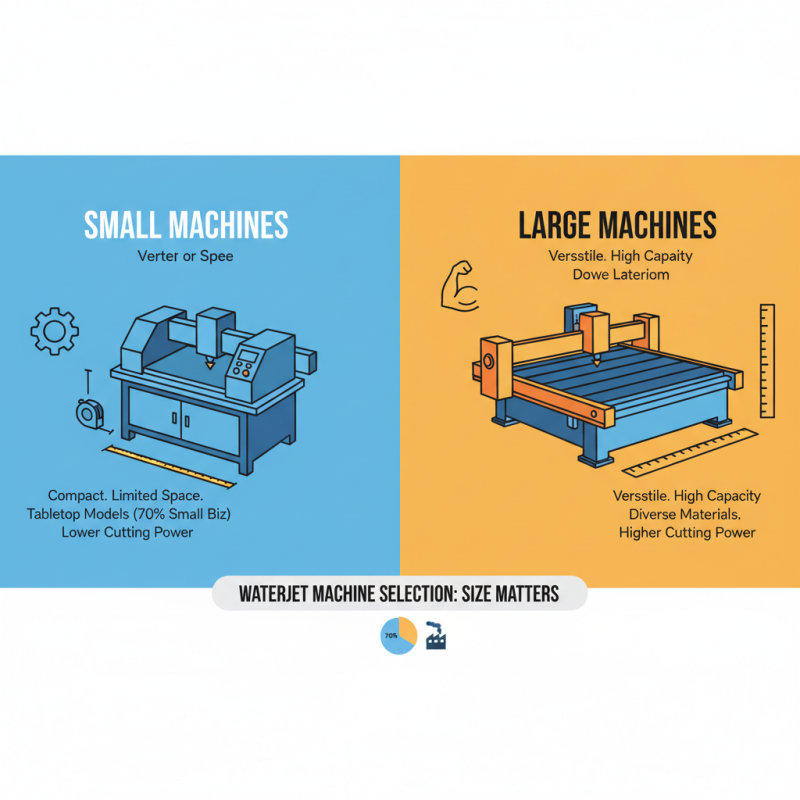
When selecting a waterjet machine, size plays a critical role. Machines come in various dimensions, affecting the workspace. Compact units fit well in smaller shops. These are suitable for limited spaces but may have lower cutting capabilities. According to industry reports, over 70% of small businesses opt for tabletop waterjet models to save space. However, larger machines offer greater versatility and cutting power. They can handle a wider range of materials, which is vital for diverse projects.
Portability is another key factor for many operators. Some machines are designed to be easily moved around. This is beneficial for contractors or businesses that require mobility. A portable waterjet can adapt to job sites efficiently. Yet, they may not always have the same cutting precision as stationary models. Industry data suggests that 45% of users prioritize portability over other features. This indicates a trend, but it also reflects the need for careful consideration regarding job demands.
Installation requirements can vary significantly among models. Some may require specialized coolant systems or dedicated electrical setups. A waterjet machine that needs extensive installation may be less appealing to small operators. Simplicity is often preferred. However, professionals must be cautious. Neglecting installation needs can lead to operational issues. As many as 30% of businesses report difficulties due to inadequate setup, highlighting the importance of thorough planning. The balance between ease of use, size, and versatility requires thoughtful evaluation.