The global electric-vehicle market is expanding quickly, making battery safety, durability, and charging performance more important than ever. The International Energy Agency reported nearly 14 million electric-car sales worldwide in 2023. BloombergNEF also recorded an average lithium-ion battery-pack price of $115 per kWh in 2024. These figures show why manufacturers and fleet operators are examining every layer of battery control.
An Ev Bms System functions as the battery pack’s control center. It monitors cell voltage, temperature, current, state of charge, and state of health. Gregory L. Plett, a recognized battery-management researcher, describes the BMS as “the brain of the battery pack.” That comparison is practical. A temperature sensor near a cell group can influence charging limits within milliseconds. A weak balancing strategy can create capacity loss across thousands of vehicles.
This Top 10 comparison evaluates systems for global buyers using measurable criteria. These include sensing accuracy, thermal protection, balancing performance, communication protocols, functional safety, software flexibility, and lifecycle support. ISO 26262 principles and UNECE R100 requirements also matter for automotive applications. Real-world integration experience matters too. Datasheets rarely reveal every limitation.
No ranking is permanent. Some supplier data remains incomplete, and regional validation can differ. A system tested in a mild climate may behave differently in desert heat or winter fleets. Buyers should verify test reports, warranty terms, cybersecurity controls, and service networks before selecting an Ev Bms System. Performance matters. Transparency matters more.
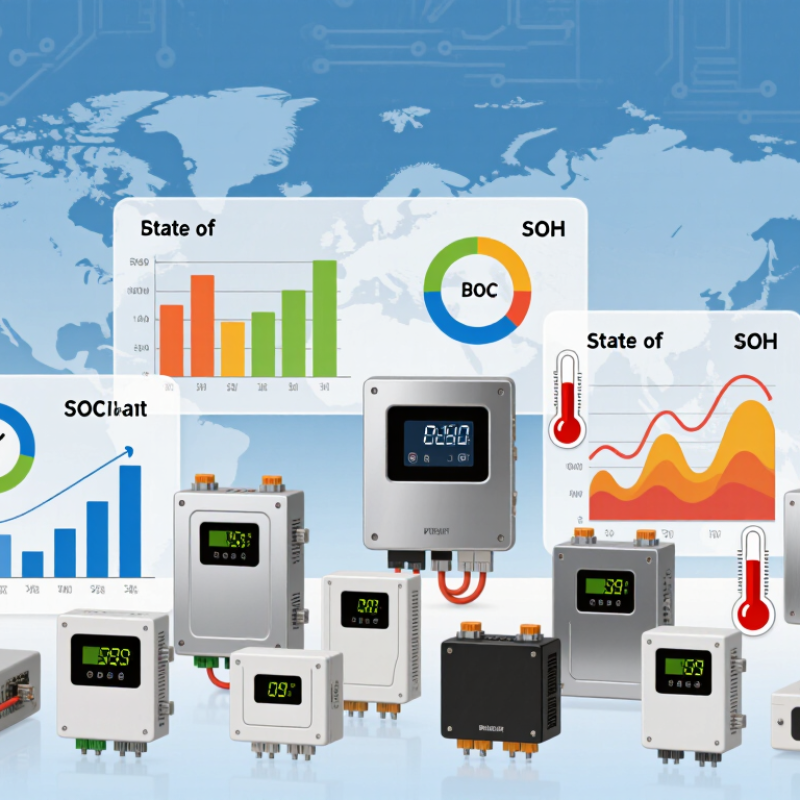
An electric vehicle battery management system acts like the pack’s control room. It measures cell voltage, temperature, current, and insulation conditions many times per second. During charging, it limits power when a cell approaches its safe voltage ceiling. During driving, it estimates remaining energy and available power. This work protects thousands of cells from uneven stress. A single weak cell can reduce the usable range of the entire pack. Real-world testing shows that heat matters quickly. Sensors near busbars may read differently from sensors near the cooling plate. That difference deserves attention.
A capable BMS balances cells, either passively by releasing excess energy as heat or actively by moving charge between cells. It also records faults, controls contactors, and communicates with the vehicle controller. If a crash signal arrives, the system can disconnect high voltage within milliseconds. Good software checks sensor plausibility, not just sensor values. A frozen temperature reading should trigger a warning, even if the number looks normal. This is where engineering judgment matters. No algorithm is perfect.
For the top ten EV BMS systems considered by global buyers, compare balancing speed, thermal accuracy, cybersecurity practices, diagnostic depth, and service support. Ask for test data across cold mornings, steep climbs, and repeated fast charging. A dashboard showing 80 percent charge is not enough. Buyers should examine how the system estimates battery health after years of cycling. Independent validation, traceable calibration, and clear failure logs build confidence. In practice, small installation details can decide whether protection works as designed.
Global buyers evaluate EV battery management systems through safety, accuracy, adaptability, and service support. A reliable BMS should monitor every cell, detect voltage changes, and control charging within safe limits. Testing should cover hot roads, freezing mornings, vibration, humidity, and repeated fast-charging cycles. Laboratory figures matter, but field evidence matters more.
Engineers also examine balancing speed, state-of-charge accuracy, thermal warnings, fault recording, and communication stability. Clear diagnostic data can shorten repair time beside a workshop lift. Cybersecurity and software update controls deserve attention across different markets. Certification requirements may vary, so buyers should verify regional compliance before selecting a system. Supplier documentation should explain test methods, not only display impressive results. I would not trust a perfect efficiency claim without independent validation.
Tips: Request sample logs from real driving tests. Check how quickly the BMS identifies a weak cell. Ask whether technicians can read faults without special tools. Compare warranty terms, response times, and replacement procedures. Do not judge ten systems by one laboratory chart. A cheaper unit may increase service costs later, while an advanced system may need better technician training. That trade-off is easy to overlook.
Choosing among the top 10 EV BMS systems requires more than comparing voltage ratings. Battery engineers examine cell-count support, measurement accuracy, thermal inputs, and communication protocols. A reliable system should detect overvoltage, undervoltage, overcurrent, insulation faults, and abnormal temperatures quickly. It should also record useful data for service teams.
Core features vary across system designs. Centralized BMS units offer simple wiring and lower installation cost. Distributed systems shorten sensor cables and fit large battery packs more easily. Modular systems can support flexible vehicle layouts. Passive balancing is affordable and widely used, while active balancing can reduce energy loss between cells. Wireless systems may simplify assembly. High-voltage versions need strong isolation monitoring and carefully tested contactor control. Cloud-connected models add remote diagnostics, event logs, and software update support.
Testing matters more than impressive labels. In practical evaluation, engineers should check balancing performance, response time, heat resistance, and communication stability under vibration. A battery pack may perform well in a workshop but behave differently after months of humidity and temperature changes. No system is perfect. A wireless design may reduce wiring, yet interference still deserves attention. I would not trust a polished specification sheet alone. Real results depend on calibration, installation quality, software settings, and maintenance discipline. Even the best BMS cannot compensate for weak cells or poor thermal design.
Top 10 EV BMS Systems and Their Core Features
The chart compares representative EV battery-management architectures by their maximum monitored cell count. Higher-capacity systems are typically designed for larger battery packs and may support distributed monitoring, high-voltage isolation diagnostics, passive or active balancing, state-of-charge estimation, thermal supervision, and vehicle communication through CAN or Ethernet. Values represent common production-oriented configuration ranges rather than company-specific specifications.
Comparing the top ten EV BMS systems should begin with safety, not marketing claims. Ask how each unit detects overvoltage, undervoltage, overcurrent, overheating, and isolation faults. Review response times, fault logging, contactor control, and emergency shutdown behavior. A system that only reports a fault is weaker than one that limits energy safely. Check whether protections remain active during firmware updates and communication loss. Test it physically. Use a controlled battery simulator, temperature probes, and repeatable fault scenarios. Do not rely on a polished data sheet.
Compatibility depends on more than nominal pack voltage. Confirm cell count, chemistry, balancing range, sensor inputs, connector layout, and CAN communication settings. The BMS should exchange clear data with the vehicle controller, charger, display, and thermal system. Ask for message maps and error codes.
Performance requires measurable evidence. Compare sampling speed, balancing current, state-of-charge accuracy, sleep consumption, and thermal response. Independent validation reports are valuable, especially when results include test conditions and limitations. Look for traceable firmware versions and a controlled update process.
In field evaluations, installation time often exposes hidden compatibility problems. A compact enclosure may still fail when cables bend tightly or moisture reaches a connector. Service access matters. Choose suppliers that provide calibration guidance, diagnostic tools, and responsive technical documentation across regions.
No scorecard is perfect. Leave room for uncertainty, because battery aging changes real performance. A careful comparison combines safety evidence, system fit, measured results, and support quality. That approach is slower, but it prevents expensive assumptions.
Selecting the right EV BMS depends on the vehicle, battery chemistry, and operating environment. A compact scooter needs low weight, simple communication, and reliable overcharge protection. A passenger car requires accurate state-of-charge estimates, cell balancing, thermal monitoring, and high-voltage isolation checks. Bigger vehicles create bigger risks.
For commercial vans and buses, review continuous current ratings, cooling support, data logging, and CAN communication. Frequent stops can increase heat and reduce battery life. The BMS should detect weak cells before they disrupt a delivery route. Off-road vehicles need sealed hardware, vibration resistance, and stable readings across dust, rain, and steep temperature changes. A laboratory specification is not enough.
Check how each system handles startup, charging faults, sensor failure, and emergency shutdown. Ask for test records, calibration methods, firmware controls, and field-service procedures. A useful BMS should report cell voltage differences clearly, not hide them behind a single dashboard number. It should also support the pack’s actual voltage range and charging profile.
Do not choose by feature count alone. More functions can mean more setup errors. This is easy to underestimate. During evaluation, compare response times under heat, cold, low charge, and sudden acceleration. Independent validation and traceable production records improve confidence. Still, no BMS removes every design weakness. Poor wiring, misplaced temperature sensors, or incomplete vehicle data can defeat an otherwise capable system.