Top Vertical Expander Machine Solutions for Global Buyers?
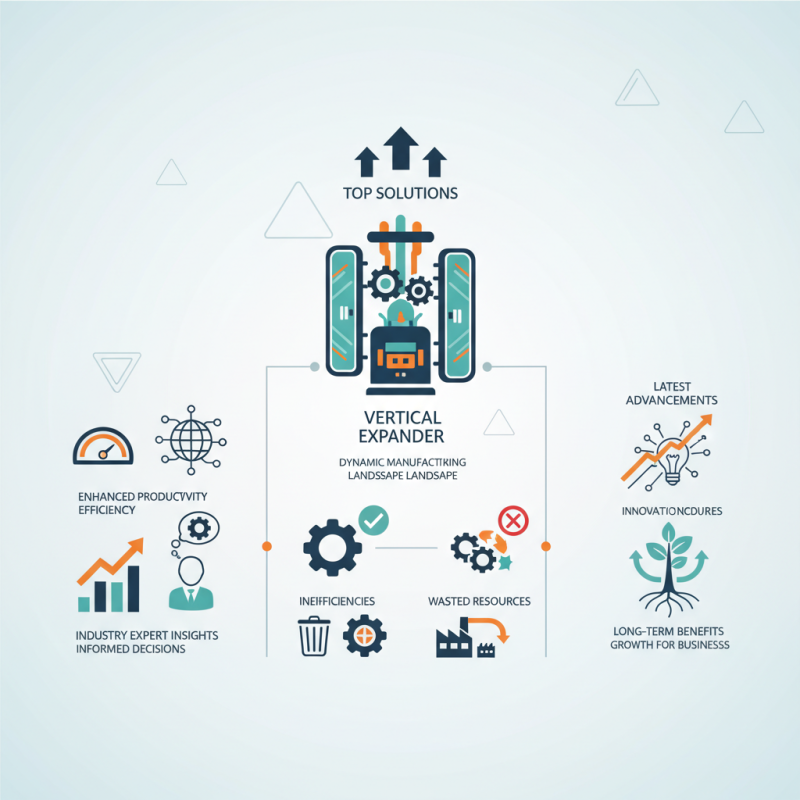
In the dynamic landscape of manufacturing, the demand for efficient machinery is ever-growing. The "Vertical Expander Machine" has emerged as a pivotal solution for companies worldwide. According to industry expert John Smith, “Investing in the right Vertical Expander Machine can significantly enhance productivity and operational efficiency." His insights reflect the pressing needs of global buyers today.
The Vertical Expander Machine is designed to optimize materials for various applications. Buyers often seek machines that are reliable and offer high performance. Yet, choosing the wrong model can lead to inefficiencies and wasted resources. Companies must consider their specific needs, making informed decisions about the technology they adopt.
Additionally, the expanding market presents both opportunities and challenges. As manufacturers innovate, it’s crucial for buyers to stay updated on the latest advancements. A commitment to continuous improvement in these machines is essential. Investing in this innovation might not always yield immediate results, but it promises long-term benefits and growth for businesses.
Understanding Vertical Expander Machines and Their Importance
Vertical expander machines play a crucial role in modern manufacturing processes. They are designed to improve efficiency in operations such as tube expansion and metalwork. Understanding their function helps in selecting the right machine for specific applications. These machines apply precise force, making it essential for achieving the desired material shape.
The significance of vertical expander machines extends beyond mere functionality. Their design ensures that various materials are expanded uniformly, which is key for structural integrity. However, there are concerns regarding maintenance and operational training. Proper maintenance is vital to avoid unexpected breakdowns. Operators need sufficient training to maximize machine use. A well-trained operator can effectively enhance the output and quality of products.
Choosing the right vertical expander is not always straightforward. Each project may have unique requirements, influencing machine selection. Global buyers must carefully consider specifications like speed, capacity, and adaptability before making decisions. Familiarity with these aspects enhances confidence in purchases. However, missteps can occur if buyers overlook critical factors like compatibility with existing systems. Such oversights could lead to costly adjustments down the line.
Key Features to Look for in Vertical Expander Machines
When selecting vertical expander machines, it’s vital to consider core features that significantly impact productivity. The construction material of the machine is paramount, as robust materials enhance durability. Machines made with high-quality alloys can withstand wear and tear, ultimately extending their lifespan. According to a recent industry report, machines with enhanced durability can reduce operational costs by up to 30%. This factor is essential for businesses seeking long-term investments.
Another critical feature is the machine's ease of use. A user-friendly interface can improve operator efficiency. Training time decreases significantly when machines are intuitive. For instance, an efficient vertical expander allows operators to make real-time adjustments with minimal friction. Industry professionals suggest that machines with automation capabilities can boost production rates by around 20%. This efficiency is crucial in high-demand settings.
Moreover, energy efficiency is increasingly vital. In recent studies, it was found that machines designed to minimize energy consumption can lead to savings upwards of 25% annually. These machines often incorporate smart technology to optimize energy use. While many buyers focus on initial costs, investing in energy-efficient machines proves beneficial over time. Nevertheless, not all machines meet these sustainability standards, leading buyers to conduct thorough reviews and comparisons.
Comparative Analysis of Leading Vertical Expander Machine Brands
When evaluating vertical expander machines, understanding the key features of different brands is crucial. Each brand offers unique advantages that cater to various industrial needs. Some machines excel in speed, while others emphasize energy efficiency. This diversity creates options for buyers, but also complexity in choosing the right solution.
A comparative analysis reveals varying strengths. Some models focus on precision engineering, providing consistent output. Others prioritize user-friendly interfaces, making them ideal for those less familiar with technology. It’s important to weigh the operational requirements against these features. While many machines boast advanced technology, not all have a straightforward learning curve.
Buyers should consider maintenance costs and the availability of spare parts. Some brands may offer excellent machines, but their support can be unreliable. This aspect impacts long-term investments. A machine is only valuable if it performs reliably over time. Thus, evaluating brand reputation in customer support stands as an essential step in the decision-making process.
Global Market Trends for Vertical Expander Machines
The market for vertical expander machines is evolving rapidly. Buyers are seeking machines that enhance efficiency and reduce operational costs. In recent years, the demand for high-quality expanding solutions has surged across various industries. Companies are looking for advanced technology to stay competitive.
Recent trends indicate a shift towards automation in vertical expanders. Buyers prefer machines that can be integrated with existing production lines. This automated approach minimizes human error and boosts output. Energy efficiency is another critical factor influencing purchase decisions. Manufacturers showing lower energy consumption attract more attention.
However, buyers must be cautious. Not all expansions are equally effective. Some machines may promise high performance but lack reliability. Conducting thorough research is essential. Engaging with industry experts can provide insights into performance. Additionally, understanding market feedback helps identify the right solutions. Striking a balance between technology and cost-effectiveness remains a key challenge for global buyers.
Global Market Trends for Vertical Expander Machines
Customer Considerations When Choosing a Vertical Expander Machine
When selecting a vertical expander machine, potential buyers must consider various factors. The market for vertical expanders has shown significant growth, projected to reach USD 1.2 billion by 2025, according to industry reports. Performance metrics should be high on the priority list. Machines with optimal throughput and reduced downtime often lead to increased productivity.
Additionally, the machine's compatibility with existing workflows cannot be overlooked. A study highlighted that nearly 45% of buyers regretted not assessing integration capabilities before purchase. Customer support and after-sales service also play a crucial role. Companies that fail to provide comprehensive support may leave users struggling.
Buyers should prioritize machines that offer energy efficiency. Reports indicate that energy savings can reach 30% with modern technology. However, not all machines claim this efficiency can deliver. Verifying performance claims through peer reviews or expert consultations is essential. Lastly, considering the long-term reliability of the machine is vital to avoid frequent repairs and replacements.
Top Vertical Expander Machine Solutions for Global Buyers
| Feature | Consideration | Rating (1-5) | Remarks |
| Speed | Production efficiency and output rate | 4 | Crucial for high-demand industries |
| Precision | Accuracy of the expansion process | 5 | High precision needed for quality products |
| Durability | Longevity of the machine components | 4 | Vital for reducing downtime |
| Maintenance | Ease of machine upkeep | 3 | Impact on operational efficiency |
| Cost | Initial purchase price and ROI | 3 | Balance quality with budget |
| Technology | Integration of modern features | 5 | Essential for automation |