How to Choose a Plasma Cutting Machine?
Choosing a plasma cutting machine is not simply a matter of selecting the highest amperage. The right choice depends on material thickness, cutting frequency, available power, and workspace conditions. A compact workshop may value portability, while a fabrication floor may need duty-cycle stability and automated table compatibility. The wrong match can create rough edges, excessive dross, and costly consumable wear.
This guide examines the practical details behind a dependable purchase. Expect clear comparisons of cutting capacity, air requirements, torch design, operating controls, and maintenance access. In practice, a rated cut is not always a production cut. An experienced operator checks the machine’s recommended thickness, then leaves capacity for real-world variation. Ask about it.
Cut quality also depends on clean, dry compressed air and proper grounding. A machine with excellent specifications can still perform poorly beside a damp compressor or unstable power supply. Manufacturer documentation matters, but independent user feedback and service availability deserve equal attention. Reliable support can save hours when a torch fails during a busy order. Still, no checklist is flawless. Material coatings, operator technique, and neglected filters can change results quickly. A careful buyer should test sample steel whenever possible and record the settings. That small step exposes assumptions.
The aim is not to promote one brand or one specification. It is to help you choose a plasma cutting machine that fits your actual work, budget, and safety procedures. Some decisions remain uncertain. Honest evaluation is better than impressive numbers.
Define the Materials, Thickness, and Cutting Tasks
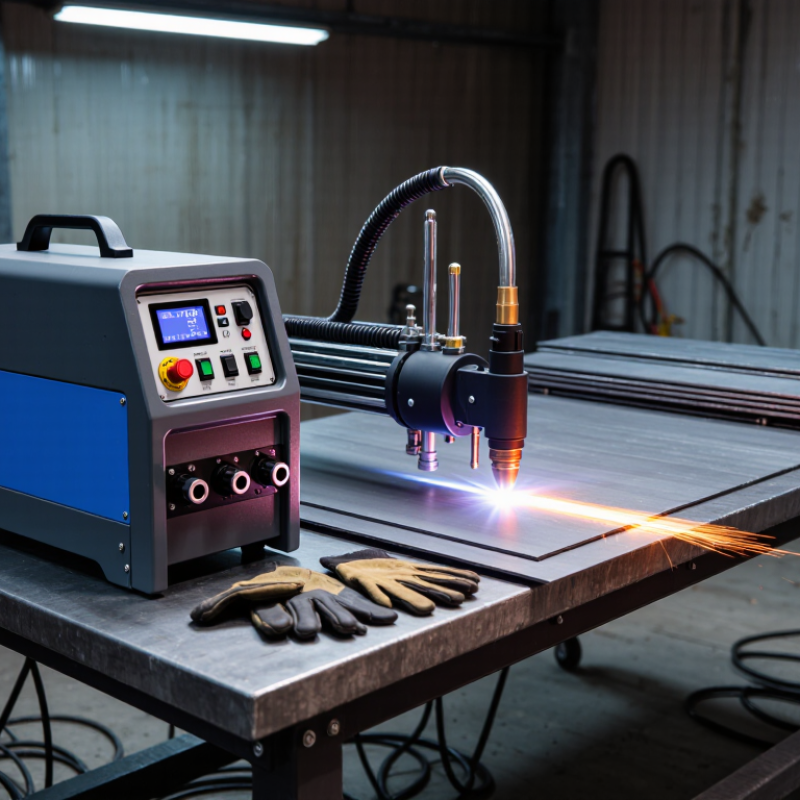
Choosing a plasma cutting machine starts with the material, not the machine’s advertised amperage. Mild steel, stainless steel, and aluminum transfer heat differently. The World Steel Association reported global crude steel production of about 1.89 billion tonnes in 2023, showing the scale of steel fabrication worldwide. Yet workshop demand varies greatly. List your common materials, their actual thicknesses, and required edge quality. A machine cutting 12 mm steel may struggle with repeated 20 mm work.
Thickness ratings need careful reading. Compare recommended cutting thickness with maximum severance thickness. The first supports cleaner, faster production. The second may produce a rough edge and slower travel. Also check duty cycle, pierce capacity, kerf width, compressed-air quality, and electrical input. ISO 9013:2017 evaluates thermal-cutting quality through edge squareness and surface roughness. That standard helps turn “looks good” into a measurable requirement. A neat cut is not always a precise cut.
Tips: Test a sample plate before purchasing. Record amperage, travel speed, pierce delay, and dross. Use the same material grade as your real job. Add ventilation and suitable respiratory protection, especially when coatings or stainless steel are involved. The U.S. Occupational Safety and Health Administration identifies metal fumes and noise as important fabrication hazards. Small shops often overlook air moisture. That mistake damages consumables and weakens consistency. Reconsider your choice if most work requires marking, beveling, or robotic cutting; a basic handheld unit may become limiting sooner than expected.
How to Choose a Plasma Cutting Machine?
Define the material, thickness, and cutting task before selecting machine power.
This chart shows practical starting points for maximum recommended cutting thickness at different plasma current levels. Mild steel generally cuts the thickest, while stainless steel and aluminum may require more current or slower cutting speeds. For occasional fabrication and sheet-metal work, a 40–65 A machine is commonly suitable. For heavy plate, bevel cutting, or high-production work, choose a higher-current machine with sufficient duty cycle, air capacity, and CNC compatibility. Actual results depend on consumables, cutting speed, air pressure, and the machine’s rated cut capacity.
Compare Plasma Cutter Types and Power Requirements
How to Choose a Plasma Cutting Machine?
Compare Plasma Cutter Types and Power Requirements
Choosing a plasma cutting machine starts with the material, not the machine’s advertised peak power. Handheld air plasma cutters suit repair work, sheet metal, and occasional fabrication. They are portable and usually need compressed air, clean electricity, and a grounded work area. CNC plasma systems offer better repeatability for production cutting. They also require software, a stable table, and careful torch-height control.
Power requirements depend on thickness, cutting speed, and duty cycle. A small cutter may handle thin steel with a standard single-phase supply. Thicker plate needs higher amperage and may require a stronger circuit or three-phase power. Check the input voltage, maximum current, and recommended breaker size before buying. A compressor must provide enough airflow at the stated pressure. Weak airflow can create a rough edge, even when the amperage looks sufficient.
Duty cycle matters during long cuts. A machine rated at 60 percent can run for six minutes within ten minutes at its tested load. In real workshops, heat, extension cables, and dusty filters can reduce performance. I once focused too much on maximum thickness and ignored airflow quality. The cut worked, but the consumables wore quickly. That mistake still influences my buying checklist. Leave practical headroom, inspect replacement parts, and choose controls that an operator can understand without guessing.
Evaluate Consumables, Safety Features, and Maintenance
How to Choose a Plasma Cutting Machine?
Consumables often reveal a machine’s real operating cost. Check the price and availability of electrodes, nozzles, shields, and retaining caps. Choose parts that match your usual metal thickness and cutting frequency. A worn nozzle can produce a slanted cut, excessive dross, or a wandering arc. Inspect the orifice after each demanding job. It should remain round, not oval or chipped. Keep spare parts in a dry, labeled container. Cheap consumables may appear economical, but poor fit can waste metal and time.
Safety features deserve careful attention. Look for a trigger lock, thermal overload protection, and a stable pilot arc system. A clear air-pressure indicator can prevent weak starts and uneven cuts. The work clamp should grip clean metal firmly. Use proper eye protection, flame-resistant clothing, gloves, and hearing protection. Ventilation matters because cutting coated or painted metal can release harmful fumes. Never assume a quiet arc is a safe arc. Confirm the machine’s grounding instructions and inspect cables before powering it on.
Maintenance should be simple enough to perform consistently. Drain the air filter regularly, remove dust from vents, and check the torch lead for cuts or heat damage. Record consumable changes and cutting problems in a small log. Patterns become visible. In practice, operators sometimes replace parts too late. I have seen a minor nozzle defect become a poor-cutting habit. Allow the machine to cool, then clean it carefully. A complicated maintenance routine may look professional, but it will fail if nobody follows it.
Balance Machine Cost, Workspace Needs, and Future Use
Choosing a plasma cutting machine means balancing purchase cost, workspace, and future workload.
The cheapest unit may require expensive upgrades, including a larger compressor, stronger wiring, or better ventilation. Check the rated cutting thickness, duty cycle, input voltage, and consumable prices. A machine rated for 12 mm steel may struggle with repeated cuts at that thickness. Leave capacity for real workshop conditions.
Workspace changes the decision. Measure the table, material storage area, and operator clearance before ordering. A compact machine suits occasional repair work, while production cutting needs stable air pressure, extraction, and room for sheet movement.
The U.S. Occupational Safety and Health Administration stresses effective control of metal fumes and adequate ventilation. Safety equipment is not an optional accessory. It is part of the machine cost. The U.S. Bureau of Labor Statistics also projects a 2% decline in welding, cutting, soldering, and brazing employment from 2023 to 2033, so buyers should question whether planned demand justifies automation.
Tips:
Compare total ownership costs over three years. Include electricity, air treatment, electrodes, nozzles, maintenance, and downtime. Select a pilot arc system for painted or rusty surfaces only when that feature supports your work. Record actual daily cutting hours for two weeks. This small test can expose unrealistic assumptions. I have seen buyers overvalue maximum amperage and undervalue table space. That is an easy mistake.